

RTO systems
Regenerative Thermal Oxidizer
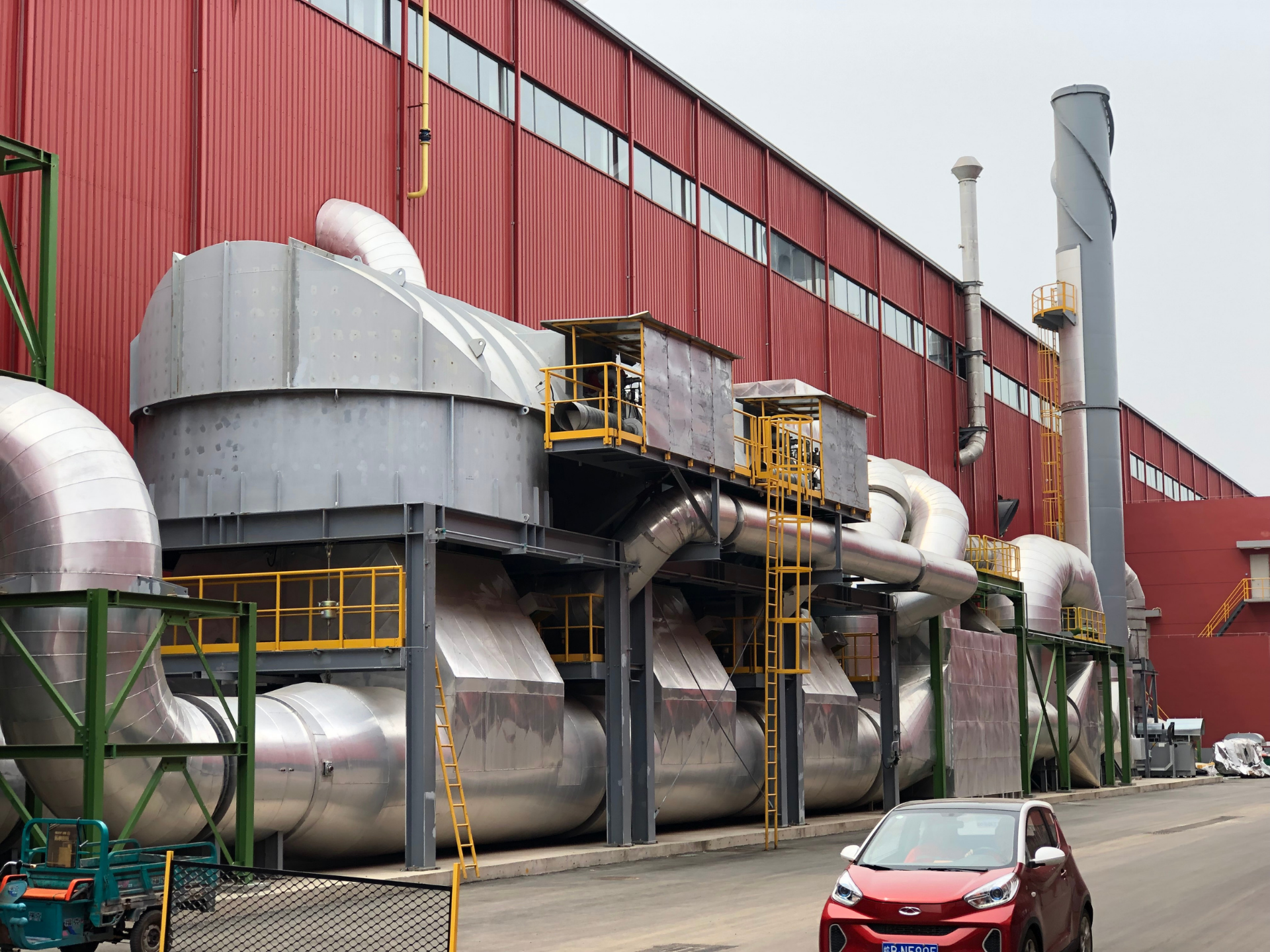
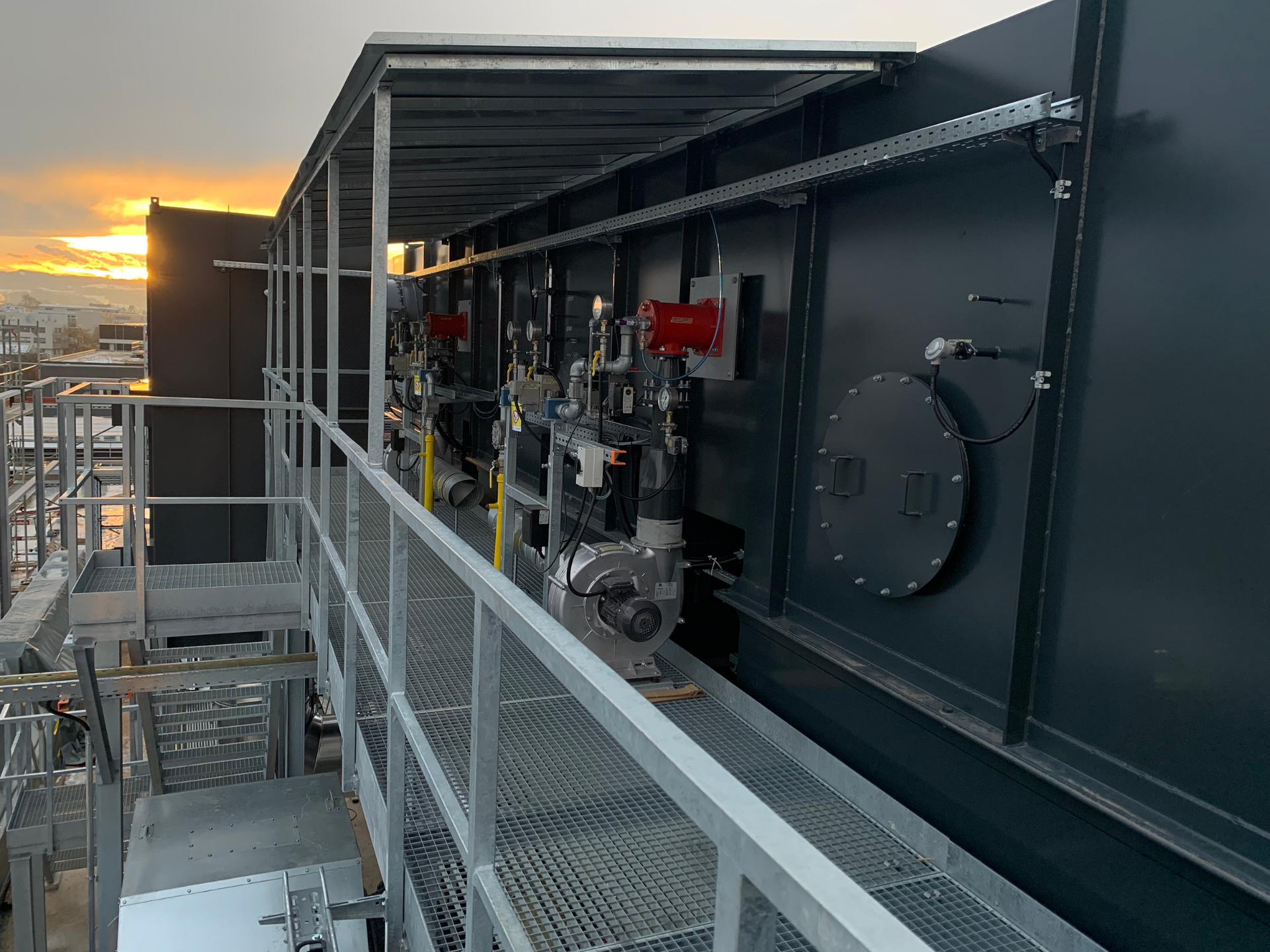
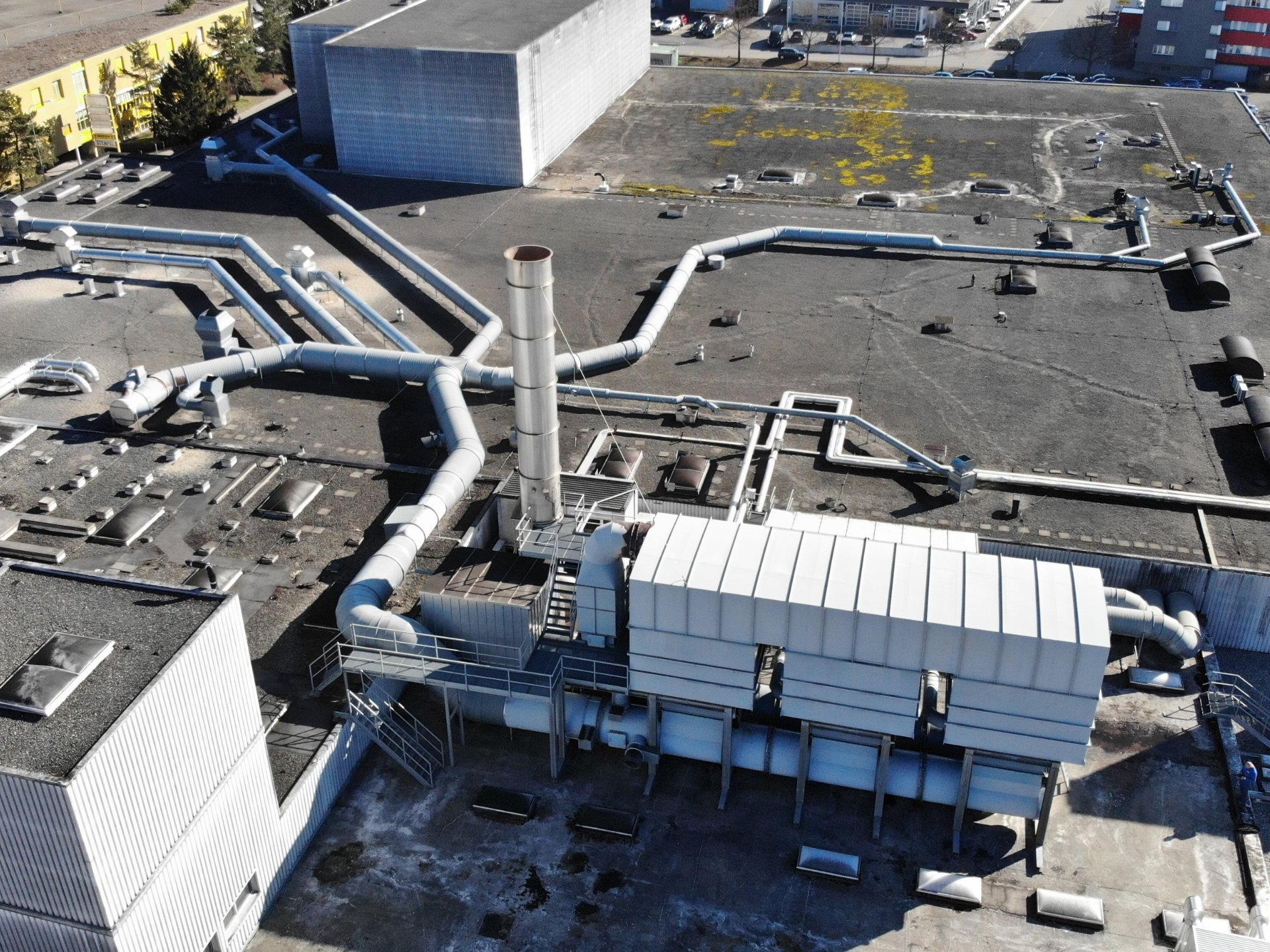
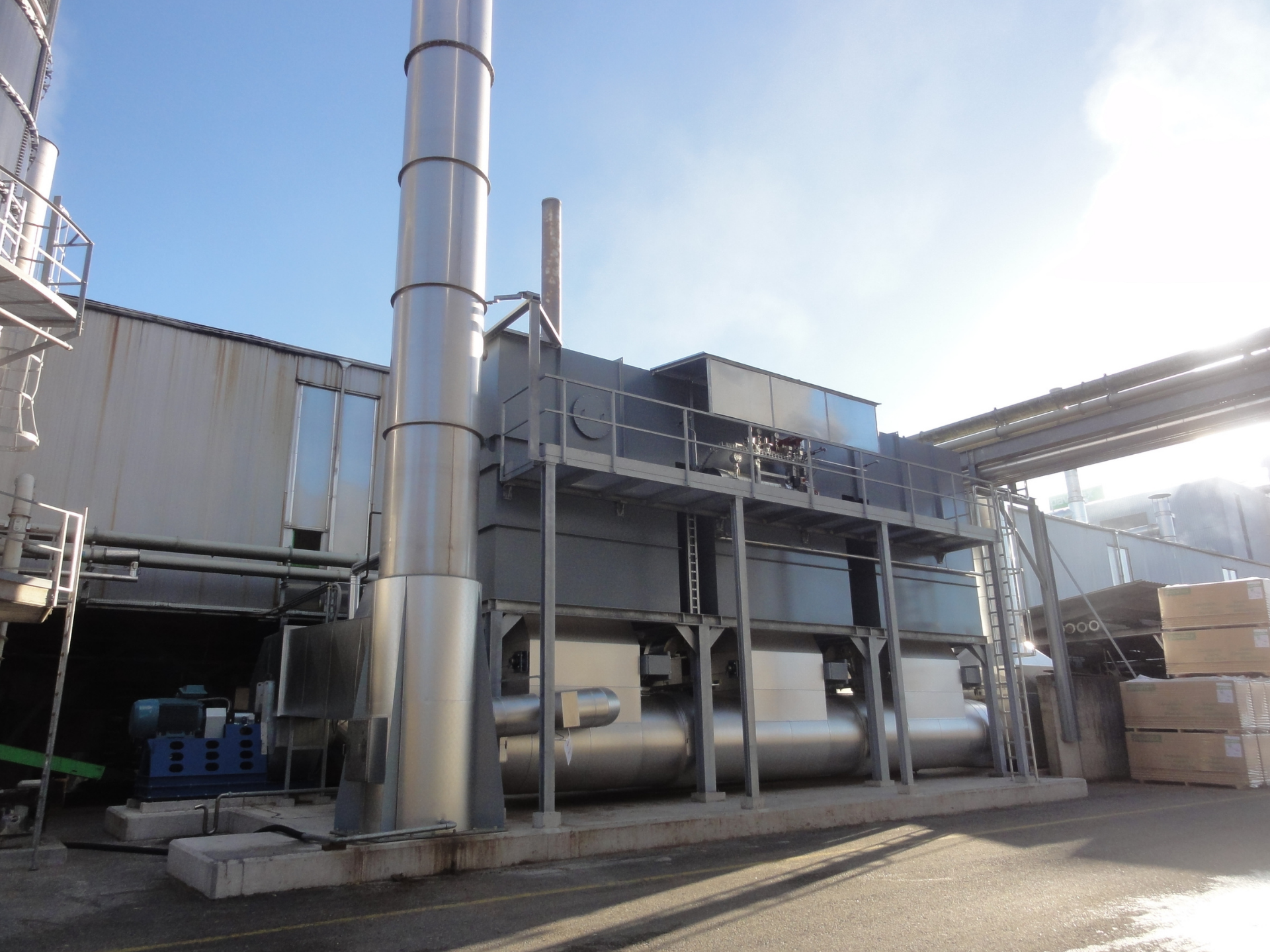
Regenerative thermal oxidizers (RTOs) treat exhaust air containing volatile organic compounds (VOCs) with high energy efficiency. In the oxidation chamber, hydrocarbon VOCs are oxidized mainly to CO₂ and water; other constituents may require additional treatment of reaction products. Operating temperature is selected for the pollutants, residence time and required emissions performance. Typical solvent applications may operate at approximately 750–850 °C.
- Thermal heat recovery efficiency of up to 97%, depending on system design and operating conditions
- Autothermal operation may be possible at approximately 1–2 g VOC/Nm³, depending on VOC heating value, inlet temperature, flow rate and heat recovery
- VOC destruction efficiency up to 99.99%, specified for the pollutant mixture and operating conditions
- Low energy consumption thanks to minimal auxiliary fuel supply
- System capacities for exhaust air volume flows from 2,000 to 250,000 Nm³/h
Technical application areas for RTO systems
- Paint and coatings industry
- Chemical industry
- Building materials industry
- Pharmaceutical industry
- Packaging industry
- Food production
- Waste management and recycling industry
- Plastics industry
- Metal industry
- Wastewater treatment plants



RTO systems
Regenerative thermal oxidizers (RTOs) treat exhaust air containing volatile organic compounds (VOCs) with high energy efficiency. In the oxidation chamber, hydrocarbon VOCs are oxidized mainly to CO₂ and water; other constituents may require additional treatment of reaction products. Operating temperature is selected for the pollutants, residence time and required emissions performance. Typical solvent applications may operate at approximately 750–850 °C.
Ceramic heat storage media are used to recover the heat released during the oxidation process (exothermic reaction) regeneratively. This achieves thermal heat recovery efficiencies of up to 97%, depending on system design and operating conditions, and significantly reduces fuel demand. Autothermal operation may be possible even at low pollutant concentrations; electrical power and start-up energy are still required.
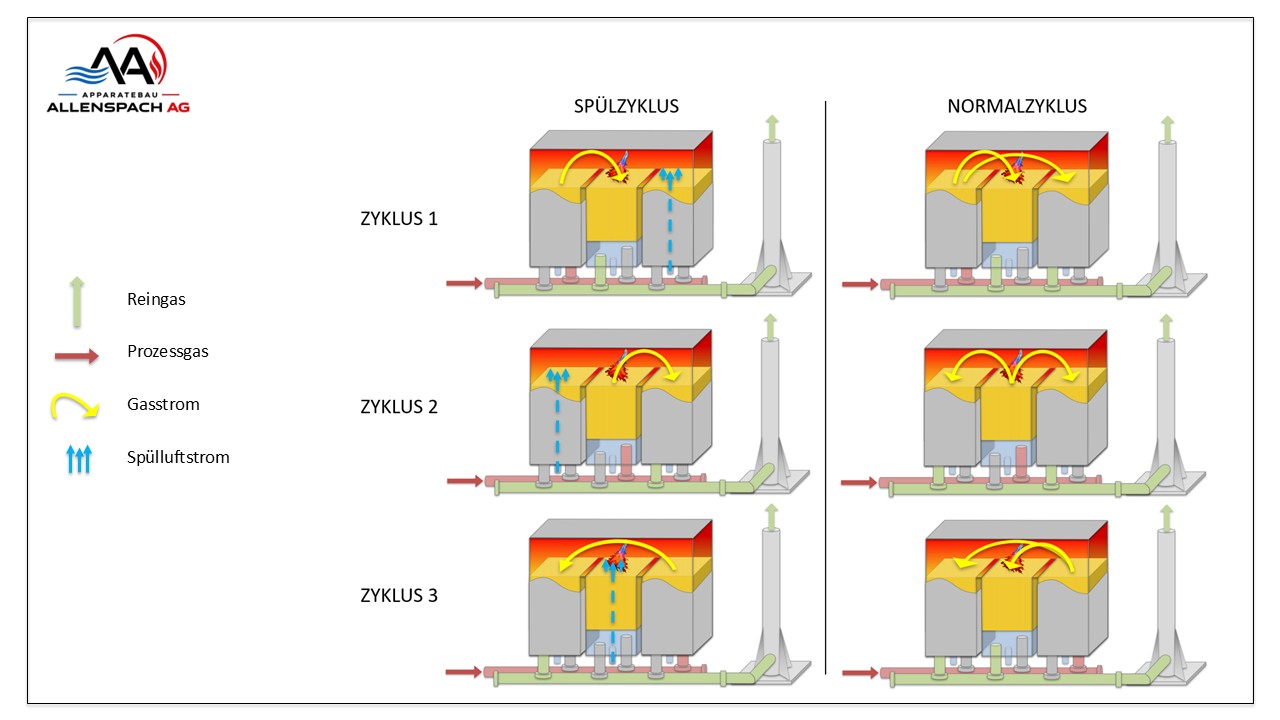
Purge cycles minimize emission peaks caused by residual untreated air during chamber switching. This achieves high purification efficiencies and ensures compliance with strict emission limit values.
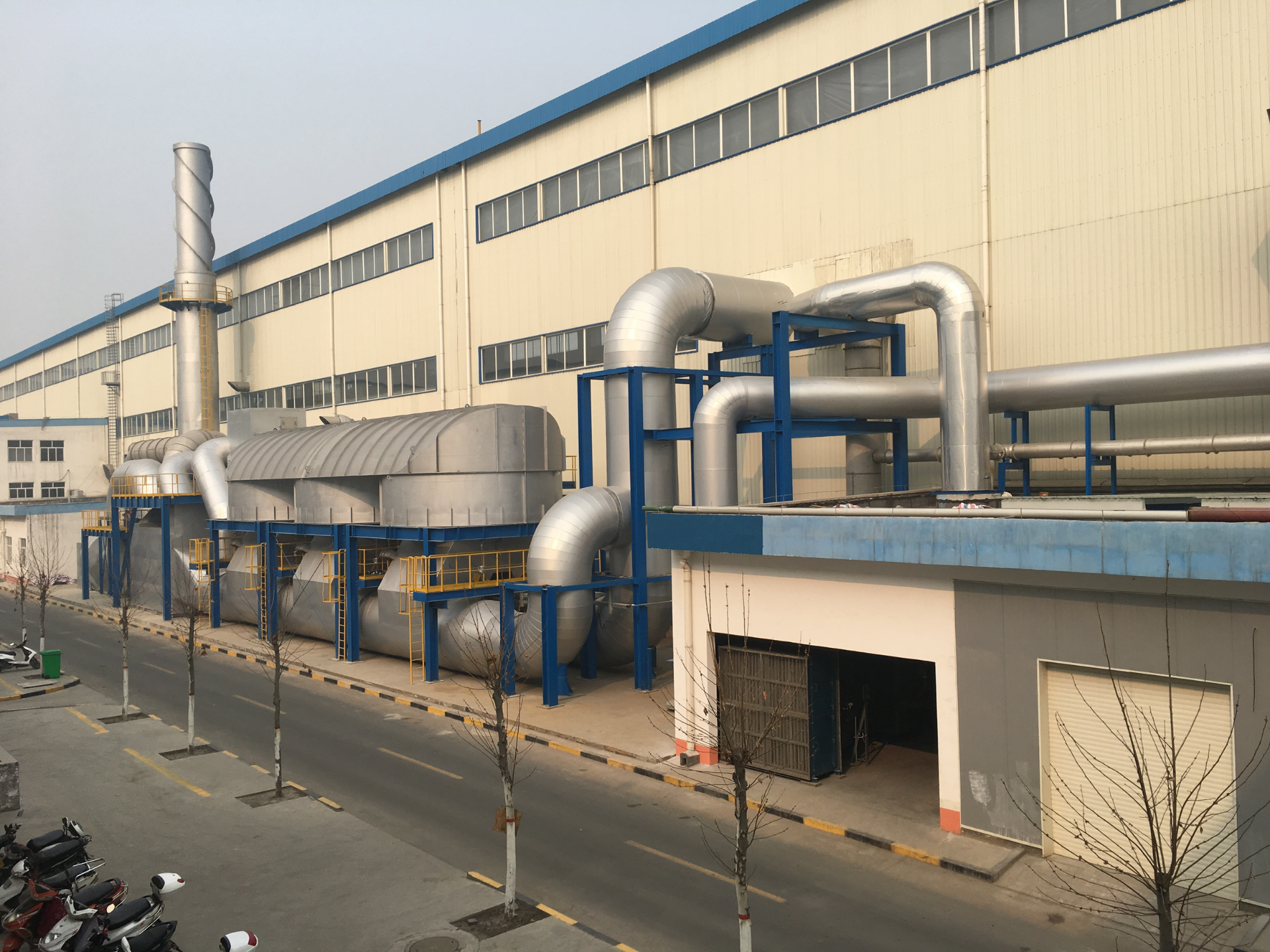
System designs are available for approximately 2,000–250,000 Nm³/h; capacity and module configuration are selected for the application. For larger flow rates, chamber configuration and burner capacity are selected to suit the process. Five-chamber and two-burner arrangements are available where appropriate.

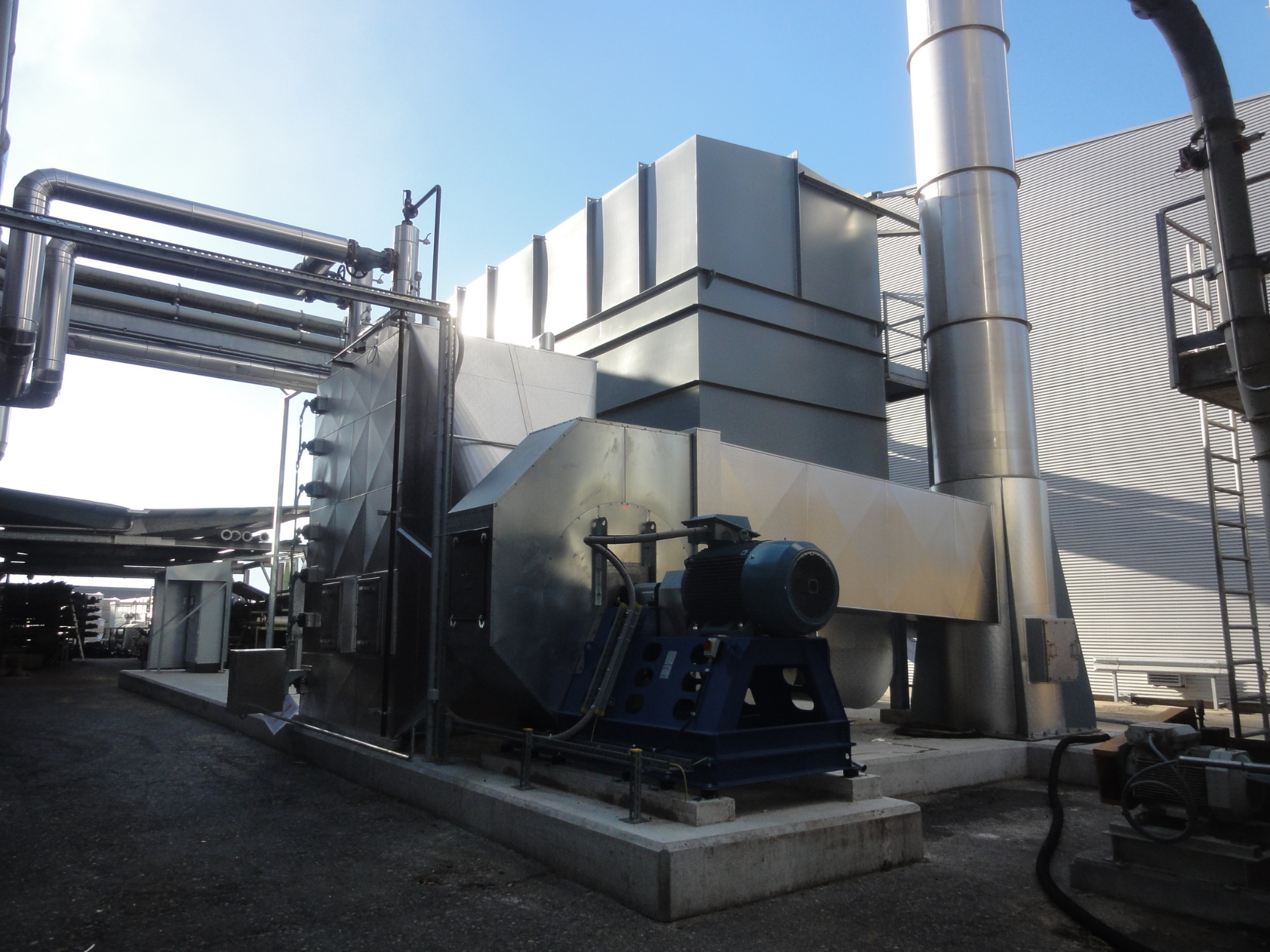
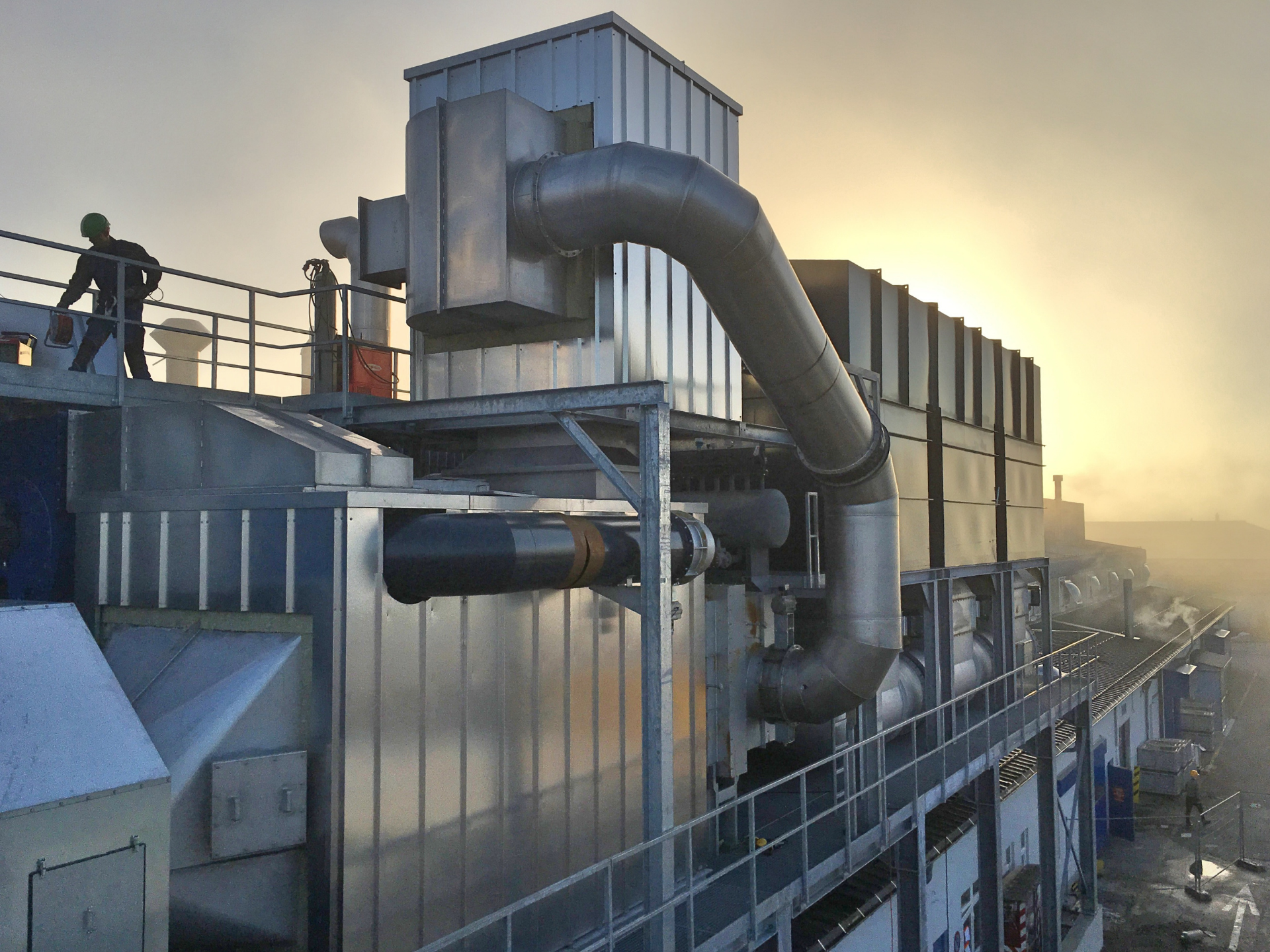
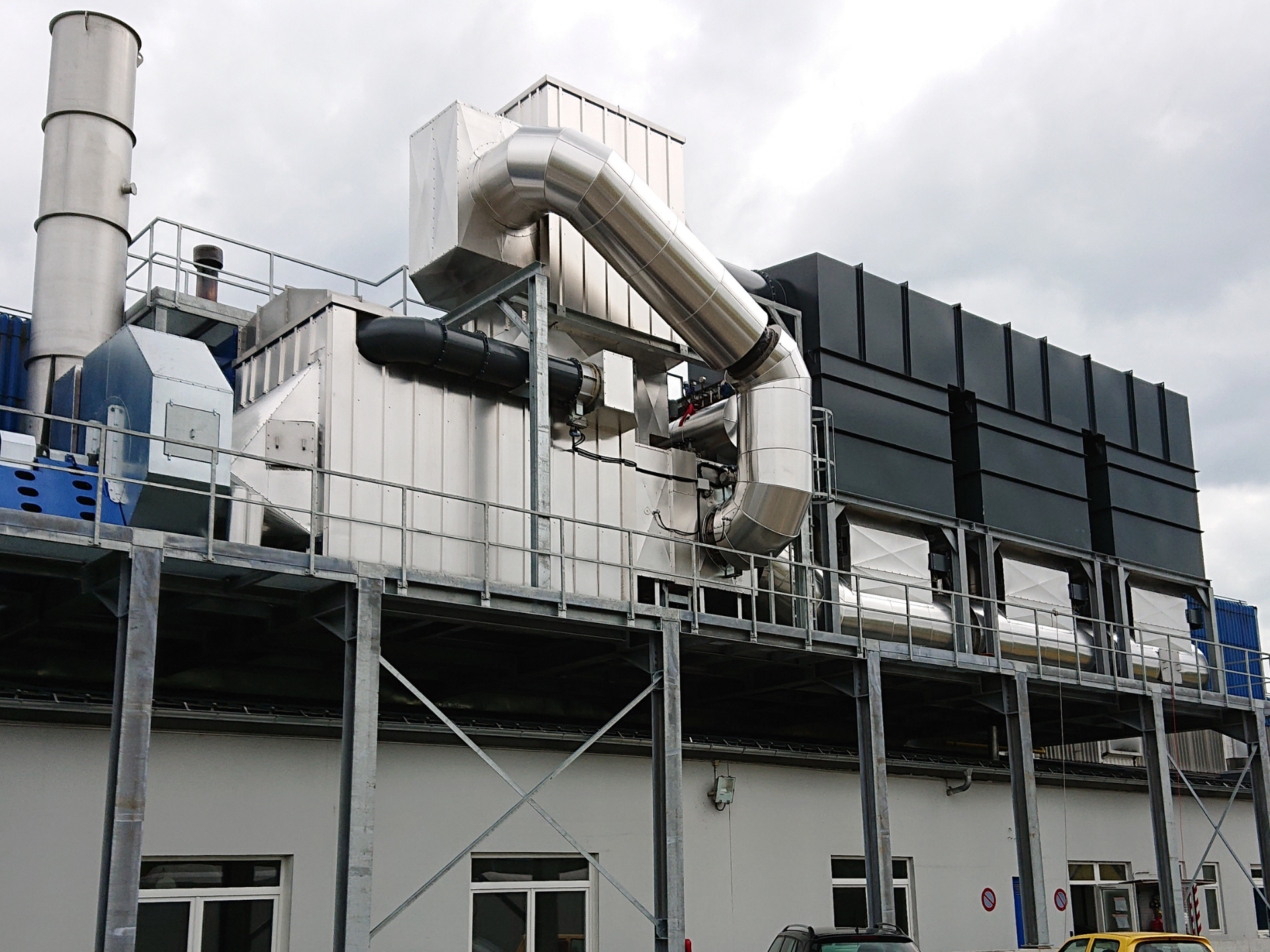
Benefits of RTO systems
- Maximum energy efficiency thanks to regenerative heat recovery
- Low operating costs
- High VOC destruction efficiencies up to 99.99%, depending on pollutant mixture and operating conditions
- Minimized emission peaks thanks to purge cycle
- Reliable compliance with national and international emission requirements
- Flexible heating systems (gas, heating oil or electric)
- Robust technology for demanding exhaust air streams
- Fully automatic, low-maintenance operation
- Optimal use of process heat through energy extraction
- Scalable multi-chamber system for small to very large exhaust air volume flows
Features of the RTO systems
- Thermal heat recovery efficiency of up to 97%, depending on system design and operating conditions
- Autothermal operation may be possible at approximately 1–2 g VOC/Nm³, depending on VOC heating value, inlet temperature, flow rate and heat recovery
- VOC destruction efficiency up to 99.99%, specified for the pollutant mixture and operating conditions
- Low energy consumption thanks to minimal auxiliary fuel supply
- System capacities for exhaust air volume flows from 2,000 to 250,000 Nm³/h
- Suitable for a wide range of VOC streams; dust, aerosols, silicon compounds and corrosive constituents may require pretreatment and application-specific design
- Purge cycle to minimize emission peaks
- Combination with VOC concentrator possible for low-loaded exhaust air streams
- Fully automatic operation with low maintenance requirements
- Reliable compliance with statutory emission limit values (e.g. LRV / TA Luft)
- High system availability and long service life
- Energy extraction (hot gas bypass) for waste heat utilization at high pollutant loads
- Gas/heating oil burner or electric heating as auxiliary energy
- Infinitely variable temperature control for optimal system operation
- Flameless configurations as an application-specific option for low NOₓ emissions
- Burnout function for cleaning ceramic heat storage media of deposits
- Controlled injection of liquid pollutants or solvents as an application-specific option, subject to verified process, emissions and safety requirements
- 3- or 5-chamber design available for different volume flows
- Modular, expandable system concept (optional) for future capacity increases
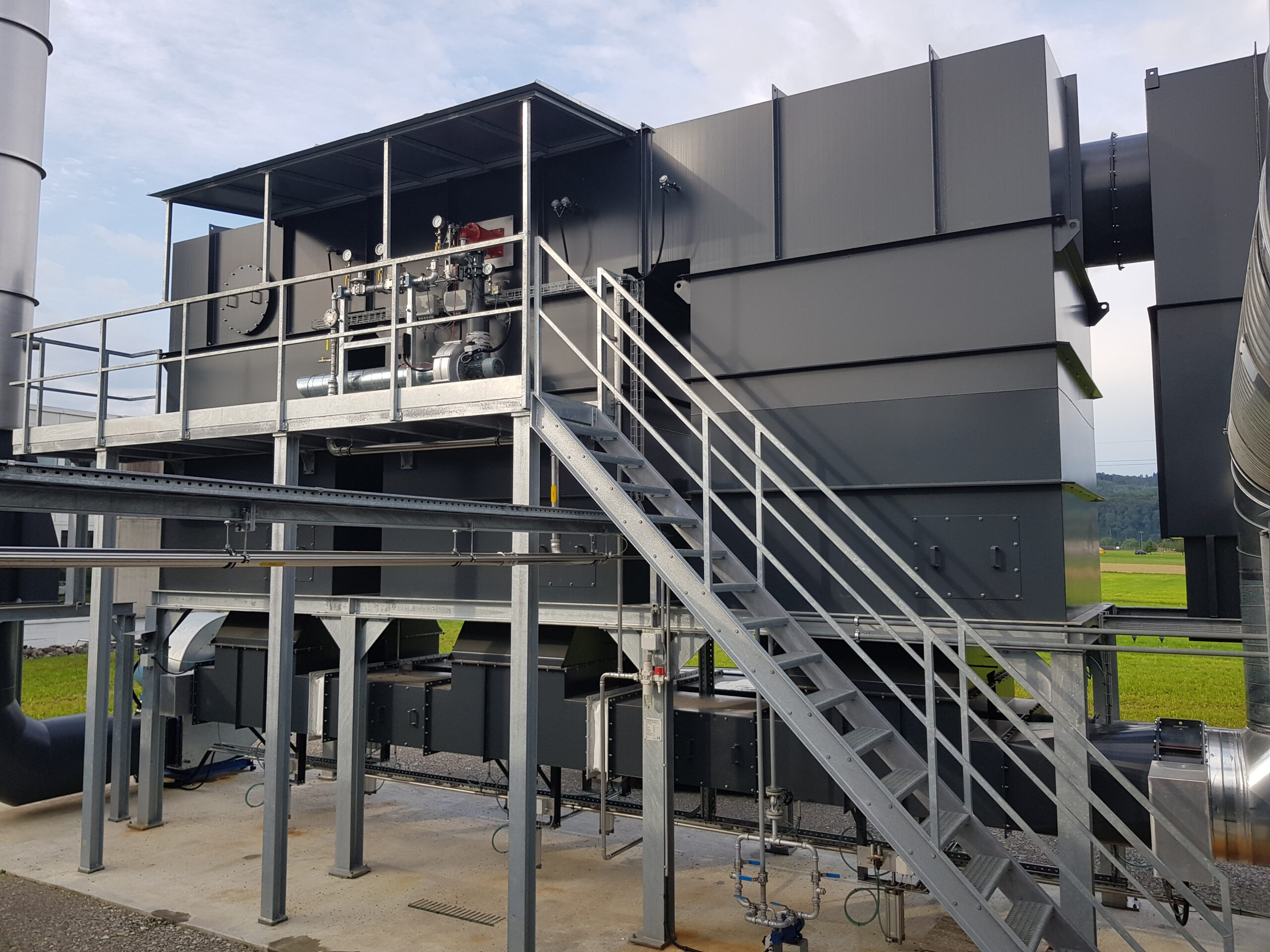
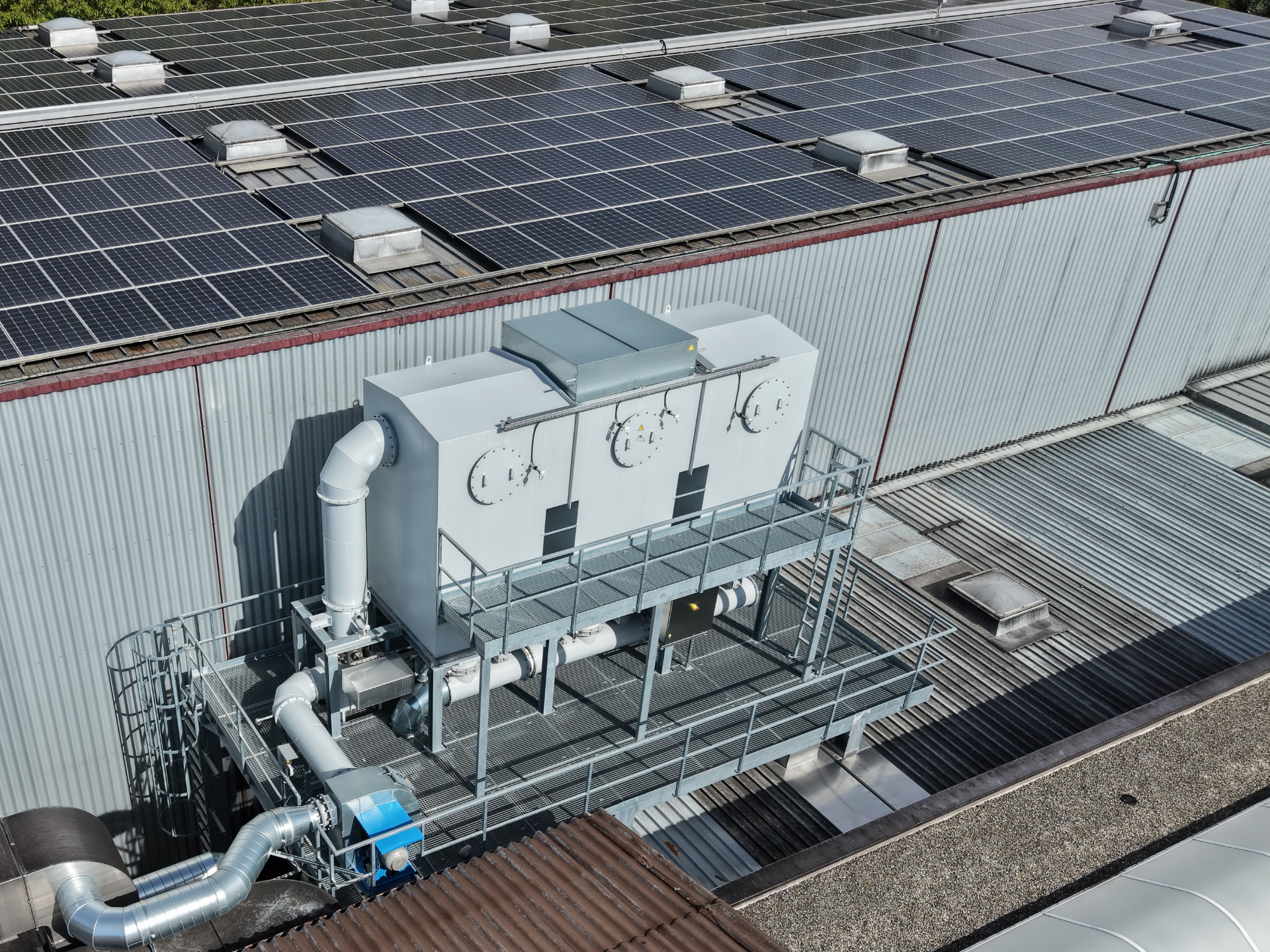
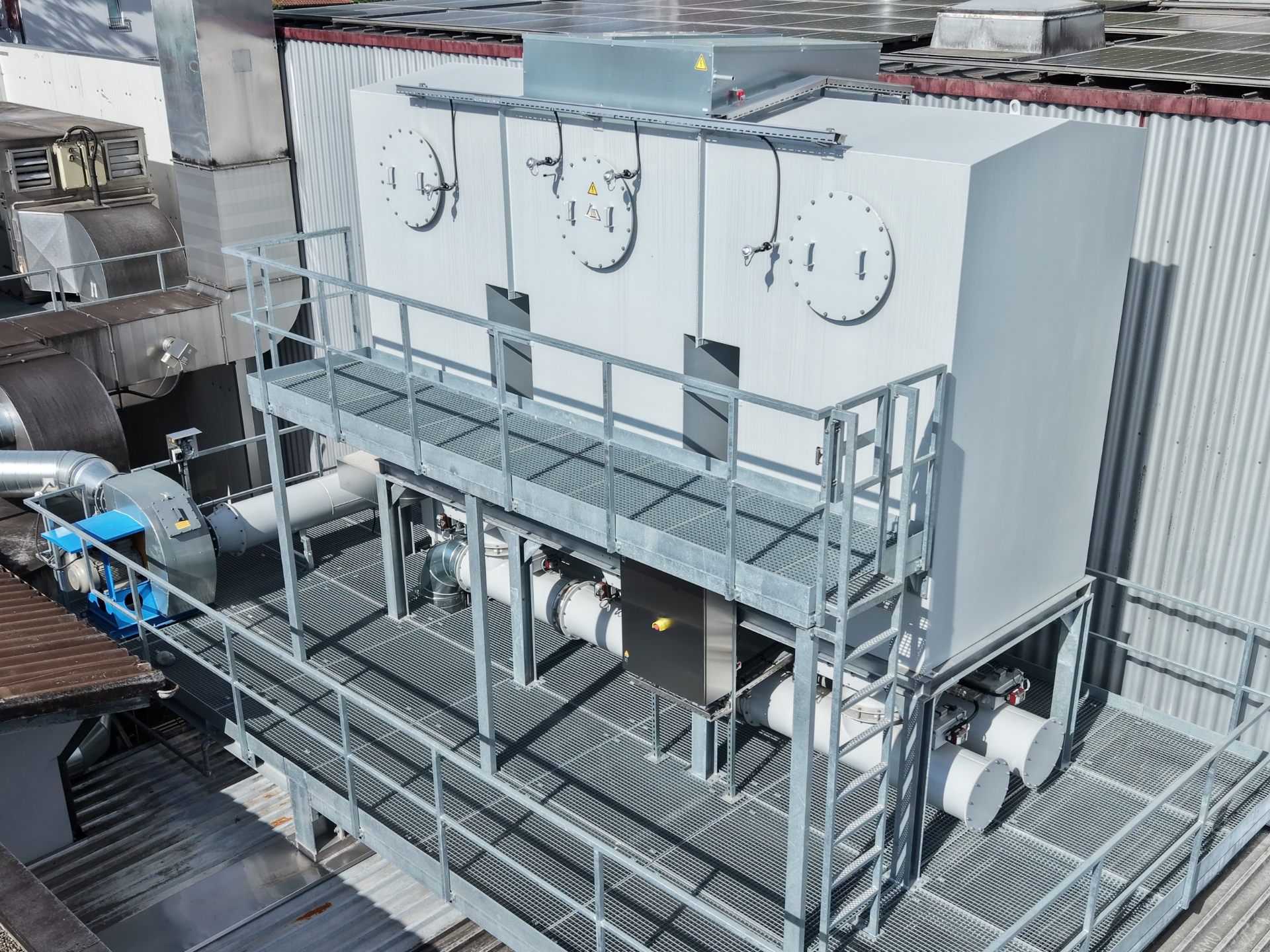
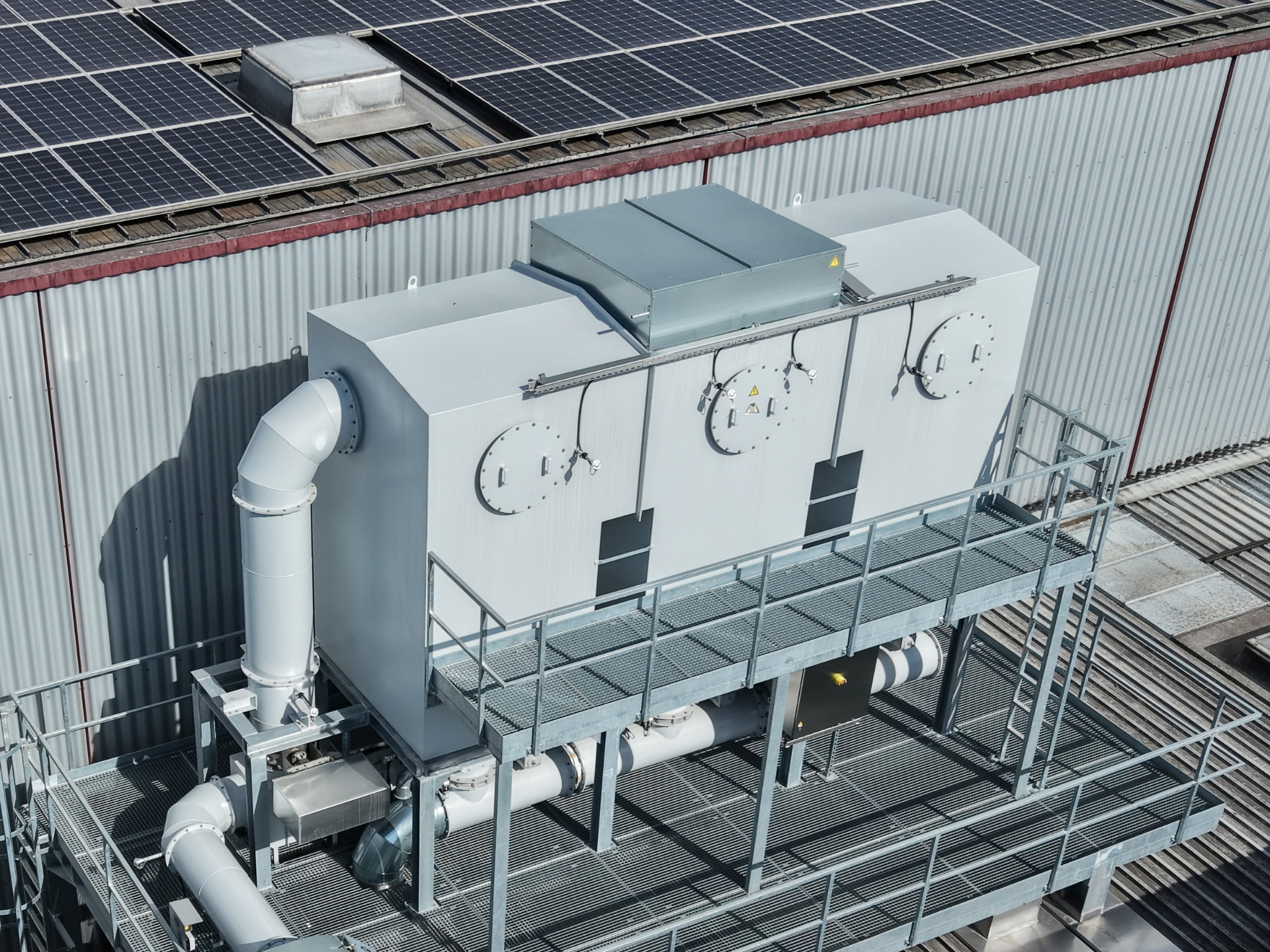
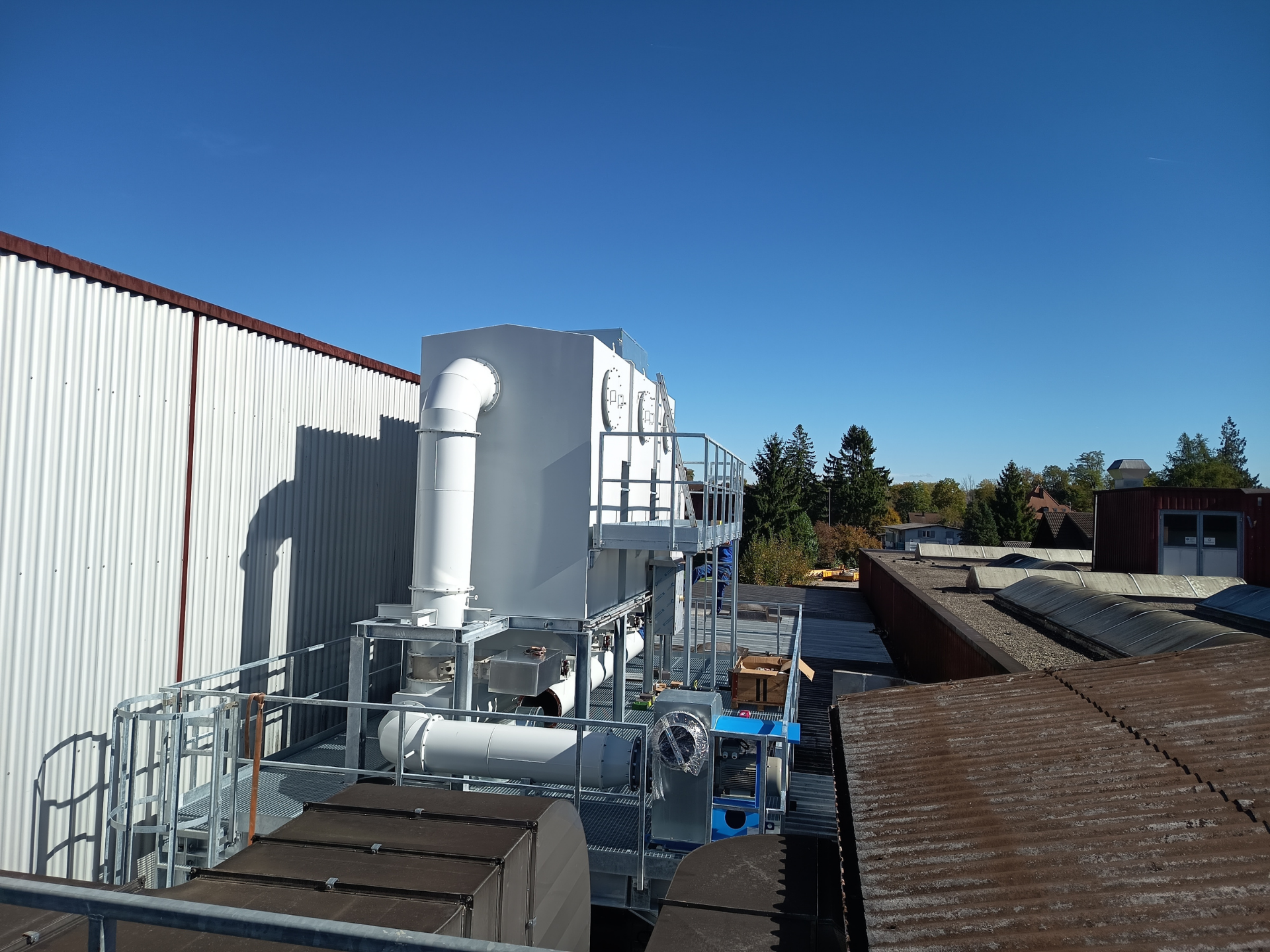
Electrically heated RTO (E-RTO)
The electrically heated regenerative thermal oxidation (E-RTO) was developed for applications where the use of fossil fuels is to be avoided. Instead of fossil fuels, the oxidation chamber is heated via high-performance electric heating elements, ensuring uniform temperature distribution and a safe oxidation process.
As with conventional RTO, the heat released in the process is recovered regeneratively via ceramic heat storage media. This achieves high thermal efficiencies and reduces electrical energy demand to a minimum. Using renewable electricity can reduce emissions associated with auxiliary heating. CO₂ formed by oxidation of carbon-containing pollutants remains part of the process emissions.
Electric heating also offers high control accuracy of the oxidation temperature as well as independence from fossil fuels and their price fluctuations. This makes the system particularly suitable for companies with their own renewable power generation or a sustainable energy supply.
Advantages of electrically heated RTO systems
- 100% electric heating without fossil fuels
- Compliance with the strictest emission limit values while optimizing the CO₂ footprint
- High energy efficiency thanks to regenerative heat recovery
- Significant reduction of CO₂ emissions when using renewable energy
- Precise, infinitely variable temperature control via electric heating elements
- Independence from gas prices and gas availability
- Electric heating avoids burner-related emissions; total NOₓ emissions depend on process temperature and the treated gas composition
- High operational reliability and low-maintenance heating system
- Ideal for sustainable and electrified production processes
- Fully automatic operation with proven RTO technology
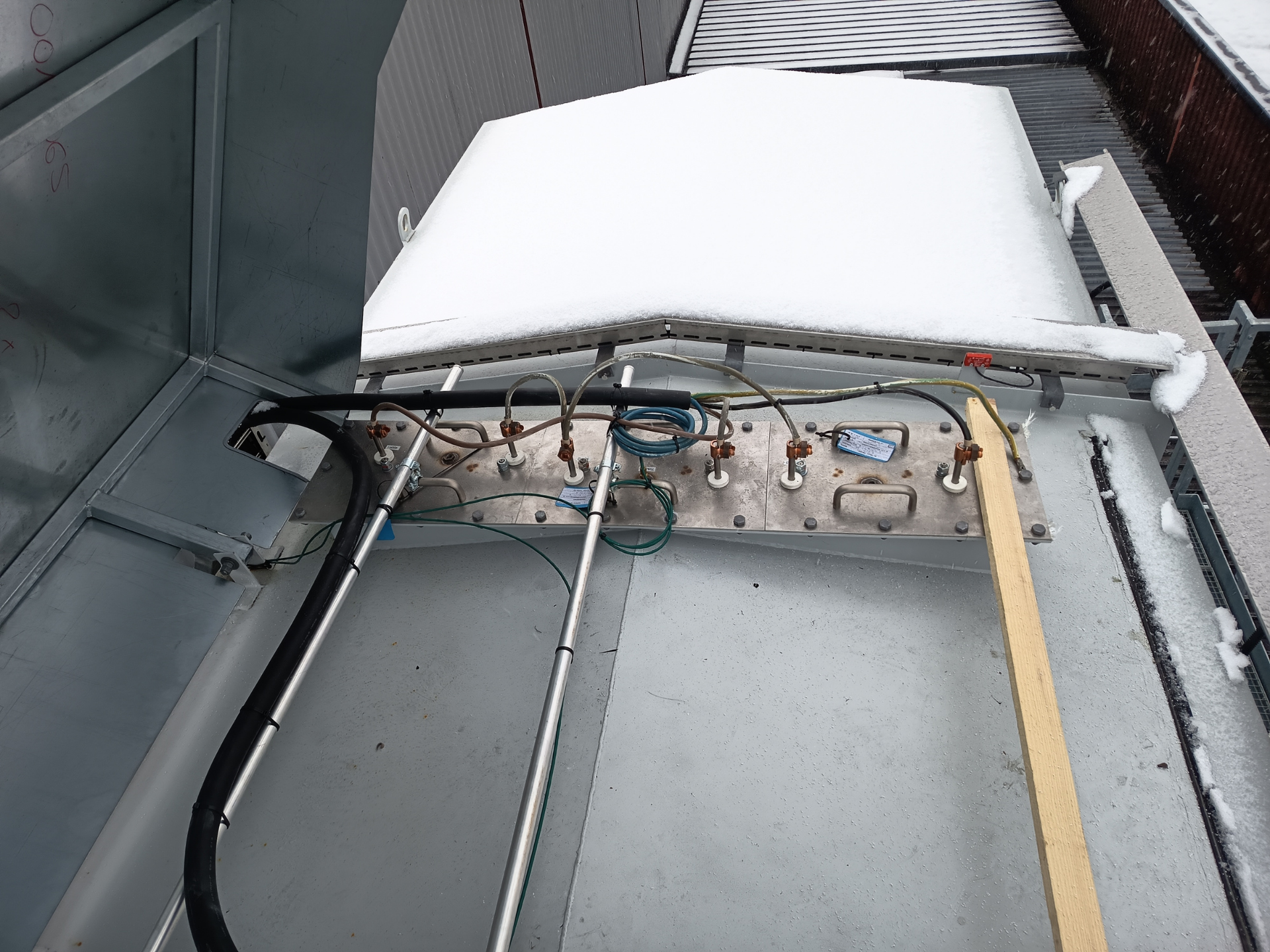
Application examples for RTO systems
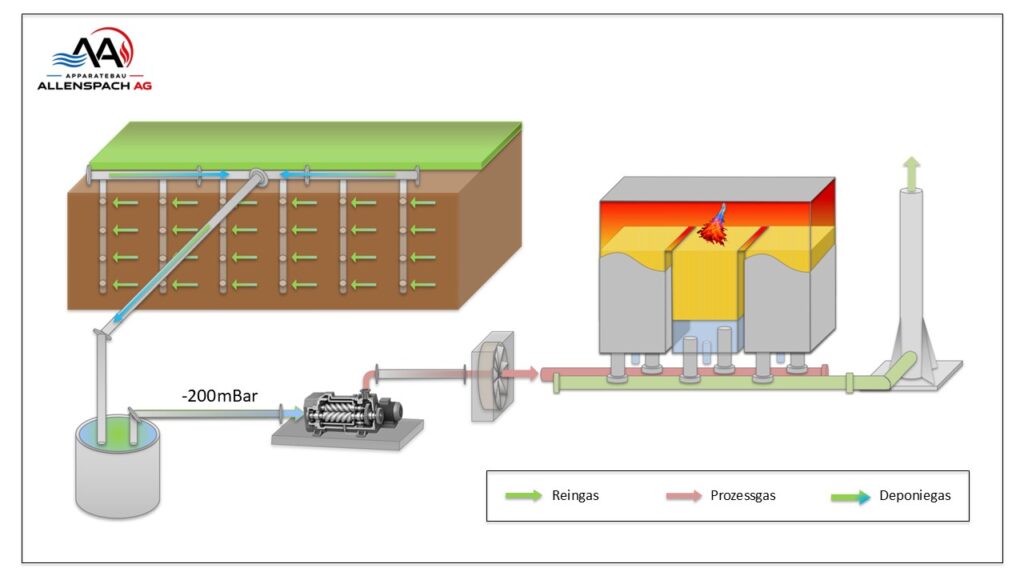
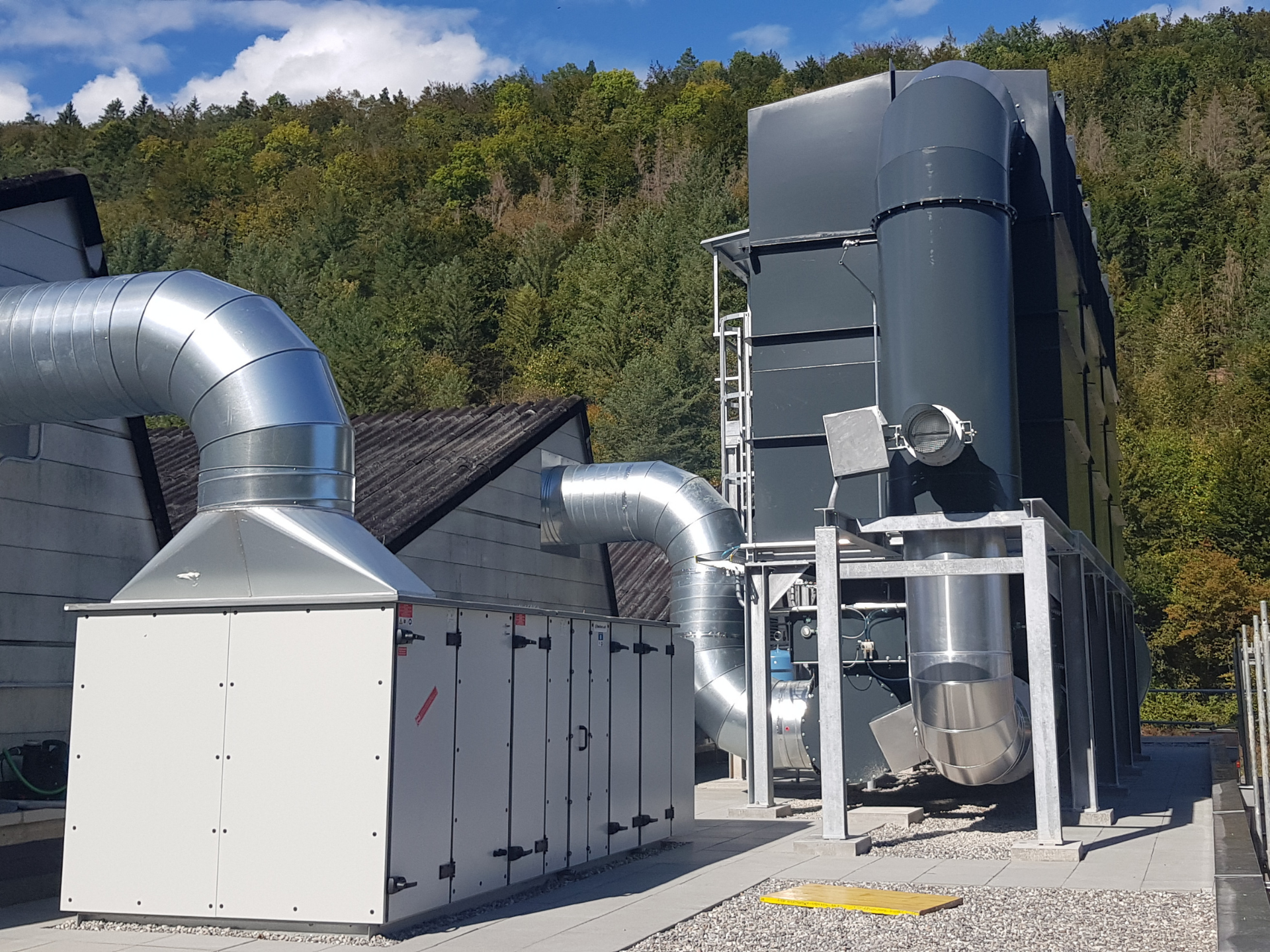
RTO Landfill Gas Plant
Regenerative Thermal Oxidizer (RTO) for Landfill Gas Treatment