VOC concentrator
Concentration of volatile organic compounds
The VOC concentrator is used for the energy-efficient treatment of large exhaust air volume flows (10,000–100,000 Nm³/h) with low concentrations (1,000 mg/Nm³) of volatile organic compounds (VOCs).
- Desorption flow of 1/8 to 1/30 of the main exhaust air flow
- 8 to 30 times higher VOC concentration in the desorption air stream
- Low energy consumption of the downstream regenerative thermal oxidizer, recuperative thermal oxidizer or catalytic oxidizer (reduces operating costs)
- Smaller design of the downstream oxidation system
Technical applications of VOC concentrators
- Paint and coatings industry
- Chemical industry
- Packaging industry
- Plastics industry
- Metal industry
- Wastewater treatment plants


VOC concentrator
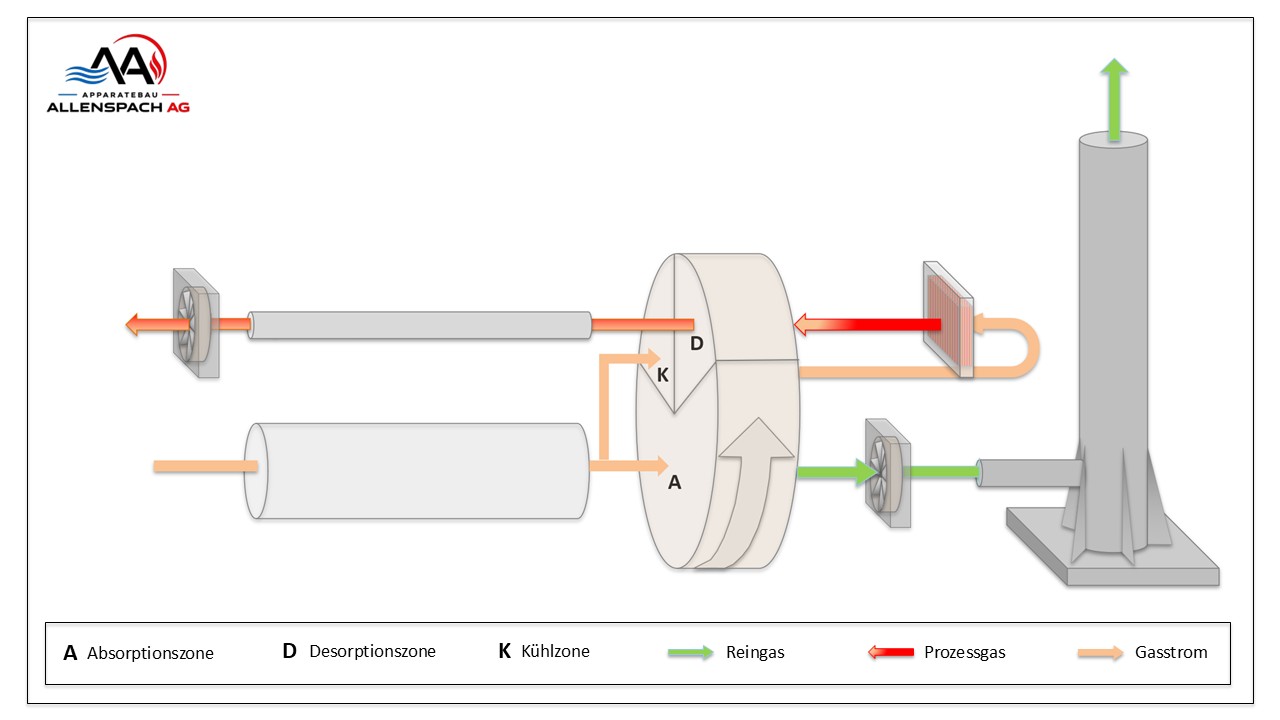
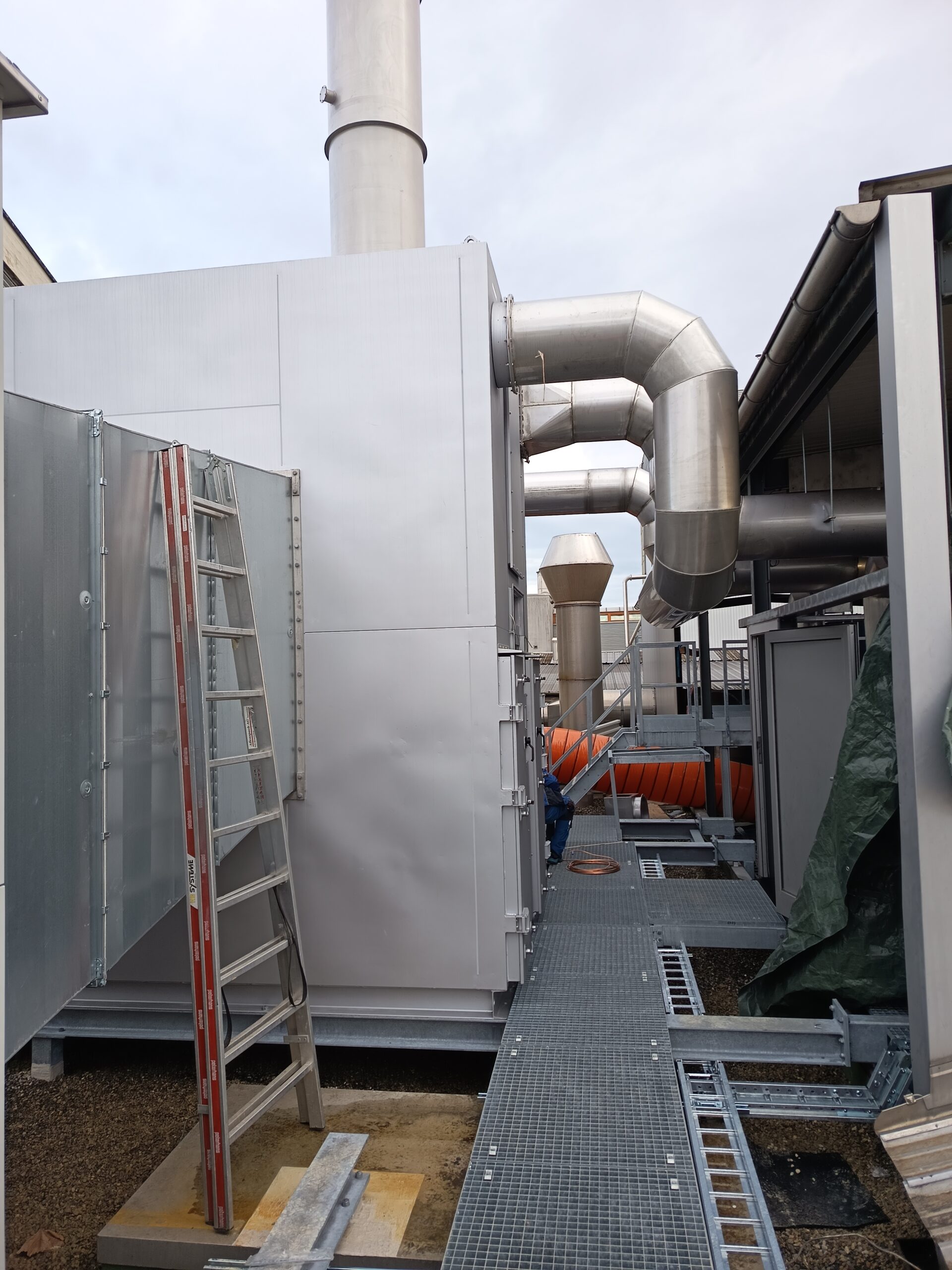
The VOC concentrator is used for the energy-efficient treatment of large exhaust air volume flows (10,000–100,000 Nm³/h) with low concentrations (1,000 mg/Nm³) of volatile organic compounds (VOCs). The core of the system is a continuously rotating zeolite adsorber, which captures pollutants from the exhaust air and concentrates them into a significantly smaller exhaust air stream.
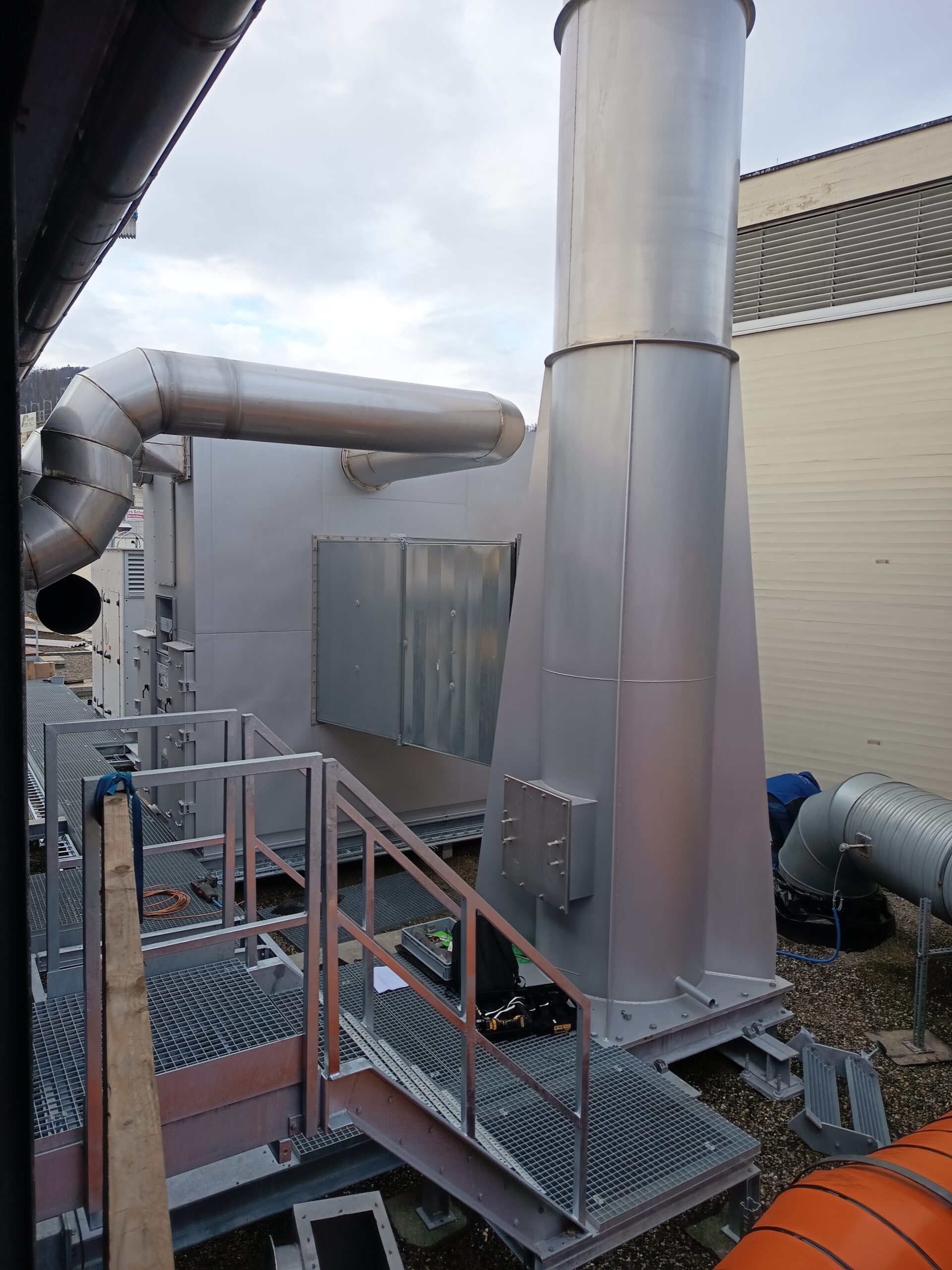
Before entering the concentrator, the exhaust air is cleaned of dust and solid particles via a multi-stage filter system. It then flows through the adsorption zone of the rotor, where the VOCs are bound in the zeolite material. The treated main air stream may be discharged through a stack when the applicable emission limits are met. Outlet concentration depends on the VOC mixture, inlet loading and rotor performance.
The VOCs adsorbed in the zeolite material are desorbed in the desorption zone using a hot gas stream of 1/8 to 1/30 of the main exhaust air flow. This increases the VOC concentration in the hot gas stream accordingly; the concentration factor depends on VOC capture and operating conditions. The high pollutant concentrations lead to an increase in efficiency for a downstream regenerative thermal oxidizer, recuperative thermal oxidizer or catalytic oxidizer.
By reducing the exhaust air volume flow to be treated, the downstream oxidation system can be designed significantly smaller. This reduces both investment costs and energy consumption and enables economical operation. The concentrated stream may support autothermal operation of the downstream oxidizer when VOC loading and heating value are sufficient.
Features of VOC rotor concentrators
- Desorption flow of 1/8 to 1/30 of the main exhaust air flow
- 8 to 30 times higher VOC concentration in the desorption air stream
- Low energy consumption of the downstream regenerative thermal oxidizer, recuperative thermal oxidizer or catalytic oxidizer (reduces operating costs)
- Smaller design of the downstream oxidation system
- Direct discharge of the treated main air stream when the applicable emission limits are met
- Suitable for large exhaust air volume flows (10,000–100,000 Nm³/h) with low VOC concentration (1,000 mg/Nm³)
- Continuous rotor operation avoids the switching-related pressure fluctuations associated with cyclic adsorber beds
- Multi-stage pre-filtration to protect the adsorption material
- Especially suitable for painting, coating, and drying processes
Hydrophobic zeolite
Hydrophobic zeolite adsorbs suitable VOCs while limiting water uptake. This keeps adsorption performance stable even with humid exhaust air and allows reliable regeneration with hot air. Rotor selection and regeneration conditions are matched to the exhaust air composition.